
Are you still doing cut-and-count for radiochemical purity?
26/08/2026
Automated radio-TLC scanning standardises practice, reduces exposure and removes user variability
Radiochemical purity (RCP) testing is essential for radiopharmaceutical QC, but traditional cut-and-count methods rely heavily on manual processes and user competency, creating opportunities for variability and human error.
For radiopharmacies looking to standardise their quality controls, our latest video explains how automated radio-TLC scanning delivers a consistent and reproducible approach.
Eliminate manual cutting and counting
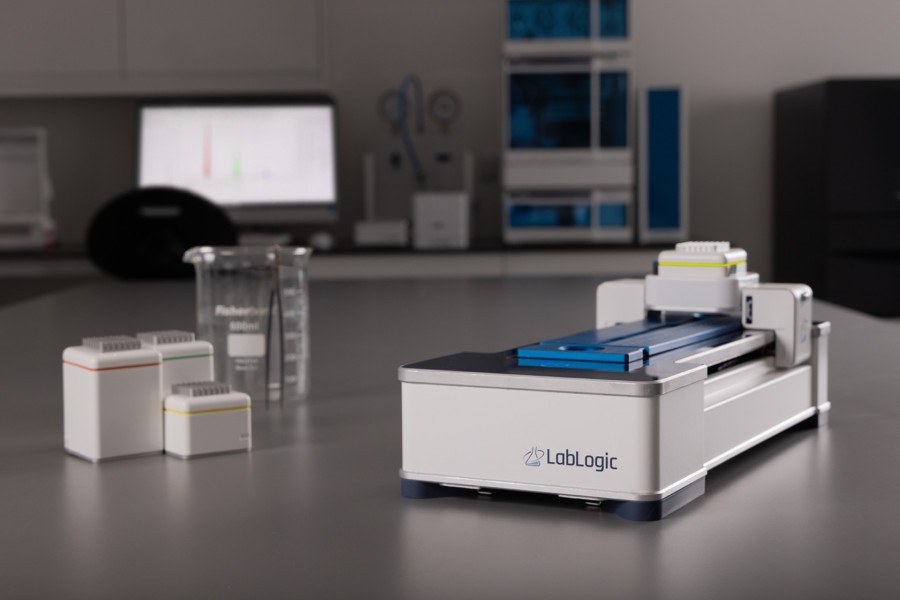
LabLogic’s Scan-RAM 2 radio-TLC scanner automates RCP measurements by capturing data directly from the chromatography strip to produce qualitative data. By removing the need to cut, handle and manually count strips, the Scan-RAM 2 minimises radiation exposure and the risk of contamination. This allows radiopharmacies to standardise their practice and generate reproducible results, while improving overall safety.
Objective, reproducible results
The Scan-RAM 2 is controlled by Laura Radiopharma, LabLogic's software for radiochromatography data collection and analysis. Laura applies automatic pass/fail criteria to RCP measurements, removing subjectivity when interpreting results. Analysis is performed instantly, helping radiopharmacists obtain consistent results while reducing the time required for testing.
By automating both data acquisition and interpretation, the Scan-RAM 2 provides a radiochromatography solution that supports standardised reproducible methods compliant with GMP.
Want to compare the two methods?
Download our application note to learn more about the differences between traditional and automated approaches to radiochemical purity testing.