
Analysing radiolabelled marine samples using the Hidex 300 SL
01/06/2026
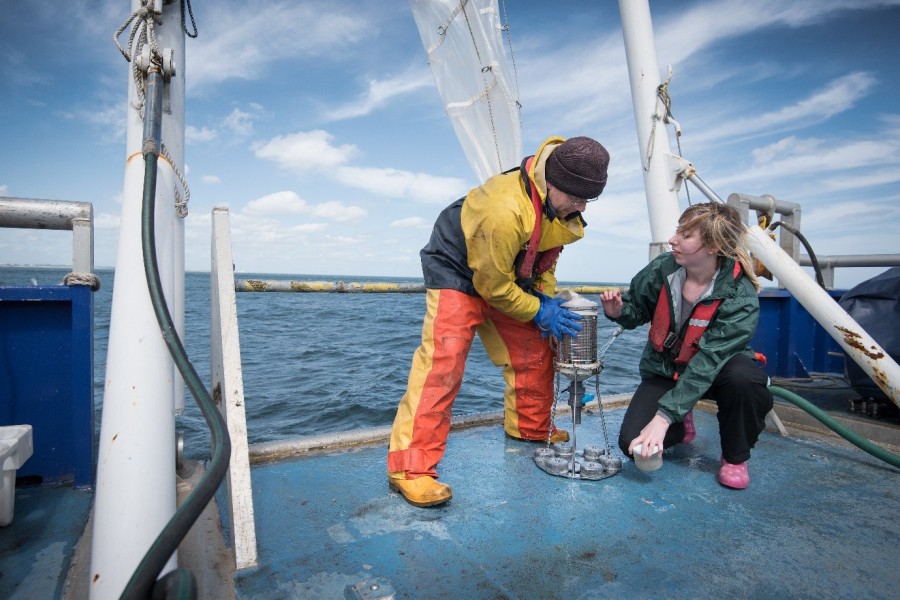
Image Credit: Envato Elements
At a glance
> IFREMER, the French Research Institute for Ocean Science, has chosen the liquid scintillation counter to monitor radioactivity in marine studies.
> The Hidex 300 SL will be used in portable laboratories housed in shipping containers for oceanographic research.
> The counter will be used specifically to quantify 14C or 3H in samples of seawater, marine rocks and sediments.
A compact liquid scintillation counter for field research
A Hidex 300 SL has been installed at IFREMER’s site at Plouzané in Brittany but will be used in portable laboratories aboard oceanographic research vessels around the world. IFREMER had opportunity to evaluate the counter at another research institute and were impressed by its compact size as well as the absence of an external radioactive standard made possible by TDCR technology, making it an ideal instrument for field research.
The Hidex 300 SL will be used in long-term research missions lasting several years. Multiple IFREMER departments will share the counter, where it will be used for expeditions such as Bicose 3, which explores the biodiversity in the deep waters of the Atlantic.
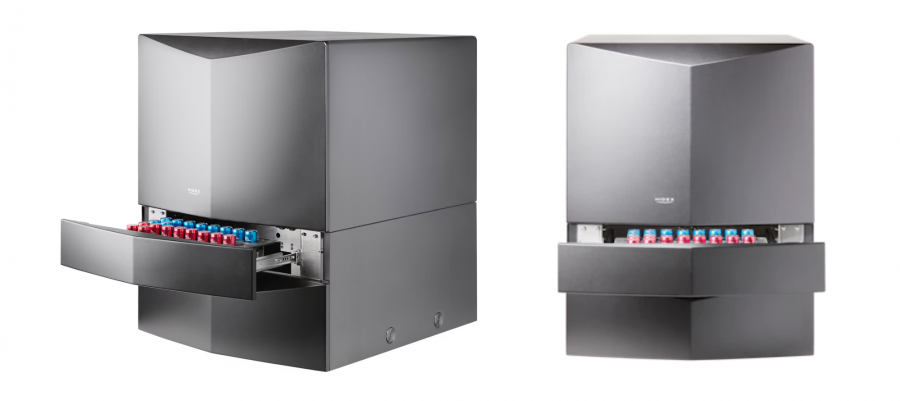
Immediate analysis of radiolabelled samples
During each mission, IFREMER teams bring back around a hundred samples for study, but given the fragility and longevity of these samples, it was realised that valuable time would be saved by being able to measure radioactivity directly on the ship.
The teams take samples of seawater, marine rocks and sediments to quantify the 14C or 3H in these samples. The Hidex 300 SL counter will also be used to monitor radiation protection on board the ship. Until now, samples taken by the Nautile submarine at depths between 2,000 and 3,000 metres had to be frozen at -80°C after being radiolabelled with 14C so that they could be analysed on land in the institute's laboratories. Now, measurements of 14C and 3H contained in samples can be taken directly on board the ship and counted.
About IFREMER
IFREMER operates in the Atlantic, Indian and Pacific oceans. Its mission is to protect and restore the world’s oceans and sustainably manage resources. The French oceanographic fleet is one of the largest scientific fleets in the world. Each year, nearly 1,800 scientists embark on 17 ships and 6 submersibles to explore depths to nearly 4 miles deep.
Find out more
You can learn more about the Hidex 300 SL by clicking the button below to speak to a product specialist directly.