Independent analysis and sampling for alphas and betas

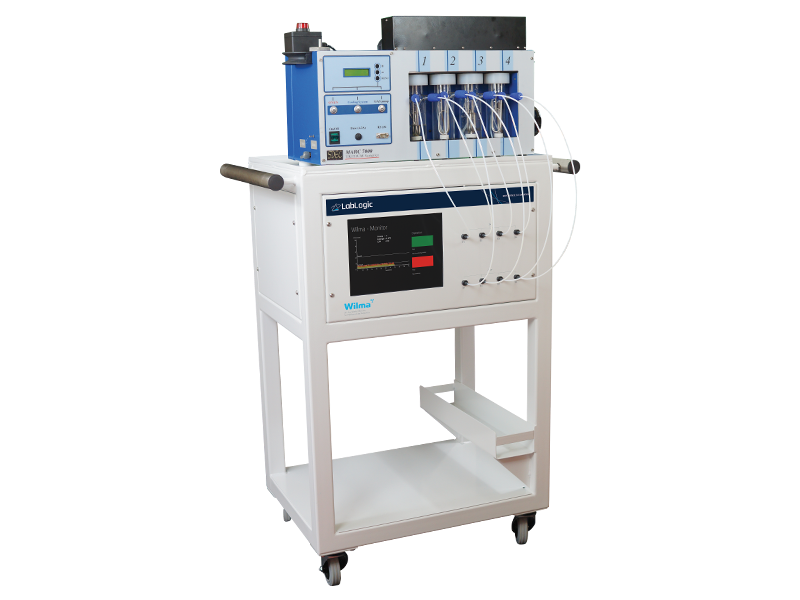
Wilma is a fully automated on-line monitoring system for the detection of radioactivity in water and air. It automatically collects and prepares samples for liquid scintillation counting to detect and measure alpha and beta contamination, removing manual input and operation.

A single integrated system

Wilma combines fluid handling for sample collection, preparation and disposal with radiation detection and analysis into a single integrated unit. All systems are housed in a compact rugged unit that can be operated in demanding environments.

Applications

Wilma is an ideal solution where routine sampling and monitoring is required such as.

  • Groundwater around Nuclear Power Plants, decommissioned reactors and isotope production facilities.
  • 3H in cooling water, reactor pools and effluent discharge points.
  • 3H in air.
  • Sources of drinking water.
  • NORM monitoring in industrial processes such as oil and gas production and mining.
  • Monitoring of tritium related to nuclear fusion demonstrator systems.

Water Monitoring System

As a Water Monitoring System, Wilma combines proven fluid handling and LSC modules with water samples at the source. It can be configured for remote measurements with data sent securely via wireless network.

The system is mounted in a rugged enclosure for protection against the elements.

A modified version of Wilma can be supplied for tritium in water monitoring for nuclear fusion relevant processes.

Tritium in Air Monitoring System

As a Tritium in Air Monitoring System, Wilma uses configurable fluid handling and a flow-through LSC detection cell to automate the operation of a tritium bubbler. The software controls cycles to sample water in the vials, as well as emptying, washing and refilling them as part of standard operating procedures.

This allows long-term remote monitoring of tritium in air at levels down to less than 10 Bq/m3, ideal for monitoring in isolated locations or areas where access is difficult.

Features

Detection Sensitivity

Wilma has proven detection sensitivity down to 100 Bq/L (2,700 pCi/L) for a 12-hour count time and 1500 Bq/L (40,500 pCi/L) for a 60-minute count time.

Highly Customizable

Wilma can be customized for any application to maximize results. The instrument can be fitted with additional sensors, integrated with external monitors and alarms, and be configured for complex or routine sampling and preparation operations.

Independent Operation

Wilma can operate independently for as long as it has the necessary reagents. It is designed to minimize waste production and reduce the consumables required, meaning Wilma can run without manual supervision or input in excess of 30 days.

Software

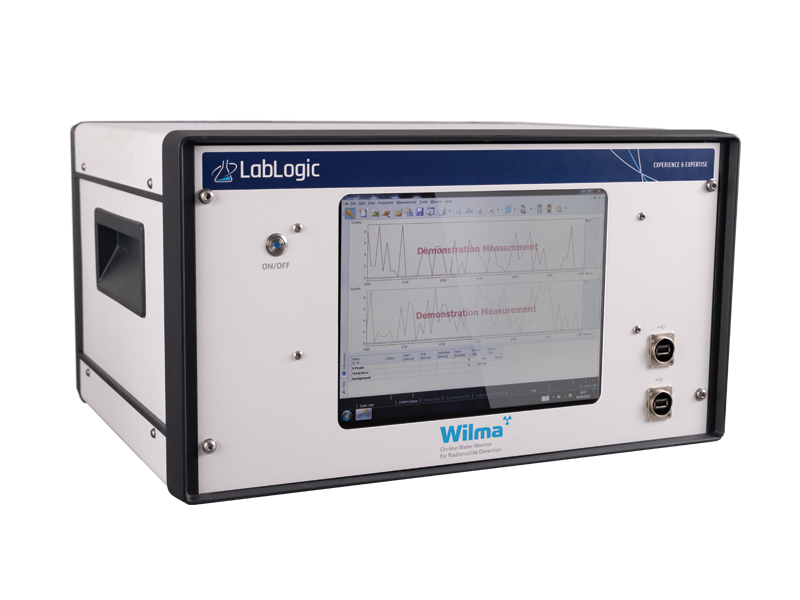
As an integrated instrument, Wilma has an in-built touchscreen computer running intuitive software. Gross counts, average count rates, and real-time sample spectrum acquisition are displayed. An animated flow diagram allows the instrument’s status to be easily observed.

Wilma can be easily configured. Measurement cycles can be customized or one of the preconfigured default settings can be used. Users can determine flow rates, analysis time, wash cycles, and periodic calibration standard injection. Measurement cycles can also be queued, allowing a series of cycles to be run over a defined period of time over several weeks.

Automatic Alarm

Should samples exceed a predetermined threshold as defined by the user, automatic alarms are triggered with email alerts sent.

MCA Module

Wilma offers an optional compact MCA module (up to 2048 channels ) which provides an additional sample analysis metric to allow for rapid identification of different sources of contamination if required.

Fluid Handling

A liquid manifold reduces the risk of leakage, provides control of sample mixing with the scintillation cocktail, and allows easy maintenance.

Rugged Housing

Wilma is housed in a rugged compact unit measuring W 500 mm x D 520 mm x H 331 mm. Everything required for operation is integrated, allowing it to be used in demanding environments.

Existing Users

Click on the tabs below to find out more about our customers, and how they are using Wilma in their facilities. 

UKAEA, UK

The United Kingdom’s Atomic Energy Authority has procured LabLogic’s Wilma monitoring system along with a Marc 7000 tritium bubbler for use in detritiation and tritium analysis experiments at the H-3 Advanced Technologies (H3AT) division. H3AT focuses on tritium processing, distribution, storage, recycling, and disposal, and is part of the Culham Center for Fusion Energy, the UK’s national laboratory for fusion research.

Mirjana Damjanovic is the UKAEA’s Waste Detritiation Lead Engineer who is leading the research into removing tritium from radioactive waste for the JET Decommissioning and Repurposing Programme. Explaining the decision to procure Wilma, Mirjana said, “We analyze tritium in water samples and did not have an existing system for continuously monitoring tritium in water, so Wilma was a new system introduced at H3AT.”

LEARN MORE

Massachusetts Institute of Technology, USA

Wilma is a fully automated online radioactivity monitoring system, designed to streamline the time-consuming process of collecting and preparing samples for detecting ionising radiation in water.

The Massachusetts Institute of Technology (MIT), a private research university in the United States, has installed Wilma recently to monitor tritium (3H) levels in cooling tower water at its Nuclear Reactor Laboratory facility.

LEARN MORE

National Physics Laboratory, UK

The MetroDECOM II project addresses a significant challenge facing the EU’s nuclear industry: creating viable solutions for nuclear waste management from decommissioned sites. The cost of decommissioning and waste management in the EU is estimated to be over €150 billion.

Contributing to the project, Wilma aims to provide a remote, automated air monitoring system to deploy to test sites, enabling the safe storage and disposal of nuclear waste.

LEARN MORE

Documents

Application Notes

Development of a sensitive on-line monitoring system for the analysis of radionuclides in water samples

By: Deakin, Tom; Beeston, John R.; Brown, Richard A.; et al.

Conference: 245th National Spring Meeting of the American-Chemical-Society (ACS) Location: New Orleans, LA Date: APR 07-11, 2013
Sponsor(s): Amer Chem Soc

ABSTRACTS OF PAPERS OF THE AMERICAN CHEMICAL SOCIETY   Volume: 245   Meeting Abstract: 156-NUCL   Published: APR 7 2013
The LabLogic Group will always treat your details with the utmost care and will never sell them to third party companies.

Please choose one of the following:


Previous
Next